
HikeSupply Co.
Winter Hiking Guide & Cold-Weather Checklist
Winter Hiking Guide & Cold-Weather Checklist
Couldn't load pickup availability
Instant access — your files are available immediately after checkout. No physical item will be shipped.
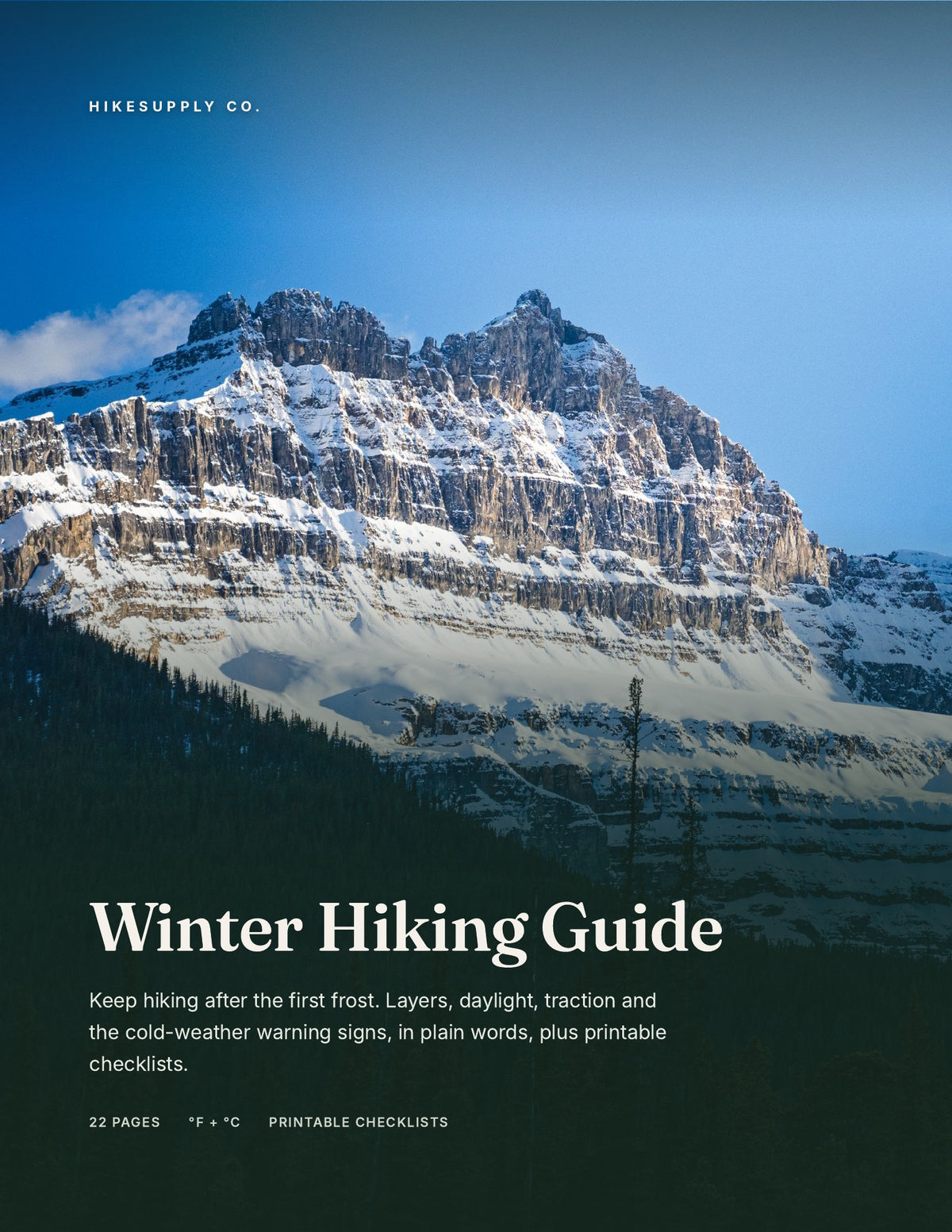
A 22-page printable guide for beginner and intermediate hikers who want to keep hiking through the cold months: layering, short daylight, snow and ice, cold warning signs and when to turn back, plus printable checklists. $7.99, instant PDF download in US Letter and A4.
Keep hiking after the first frost. A plain-words guide for beginner and intermediate hikers on layering, short daylight, snow and ice, and staying safe in the cold, with printable checklists you can take to the trailhead.
What is inside (22 pages)
- How winter hiking is different, and how to pick a winter trail and a turnaround time
- Layering explained: base, mid and shell, and why to skip cotton
- Hands, feet, head and neck
- Traction: boots, microspikes and snowshoes, and when to turn back
- Water, food, batteries and phones in the cold; sun and snow glare
- Cold-weather warning signs (frostnip, frostbite, hypothermia basics) and when to get help
- Avalanche awareness and links to official sources (NPS, avalanche.org, Avalanche Canada)
- Printable winter day-hike checklist and a layering checklist by temperature in °F and °C
- Trip plan to leave with someone, winter car kit, a cut-out quick-check card and hike log pages
Good to know
- Instant PDF download, no physical item is shipped
- US Letter and A4, colour and printer-friendly versions included
- General safety information, not medical advice. Always check local conditions and park rangers before you go
Questions
Is this guide for beginners? Yes. It is written in plain words for beginner and intermediate hikers on winter day hikes. It is not mountaineering or avalanche training; it covers avalanche awareness and points you to official sources such as avalanche.org and Avalanche Canada.
What should I wear for a winter hike? Layers you can add and remove: a base layer that moves sweat away, a warm mid layer and a windproof, waterproof shell, and no cotton. The guide includes a layering checklist by temperature in °F and °C.
Why do my headlamp and phone die faster in the cold? Cold slows batteries, so they run down sooner. Start with a full charge, keep them in an inside pocket close to your body, and carry a spare light. The guide has a section on batteries and phones in the cold.
Do I need microspikes? It depends on the trail. The guide explains when boots are enough and when microspikes or snowshoes help, and when to turn back. Check current trail conditions with the park or local rangers before you go.
Is anything shipped? No. It is an instant PDF download, and the download button arrives in your order confirmation email right after checkout.
Share